Left. Isolated cardiac cell under a confocal microscope. Red is α-actinin, green is the VDAC channel.
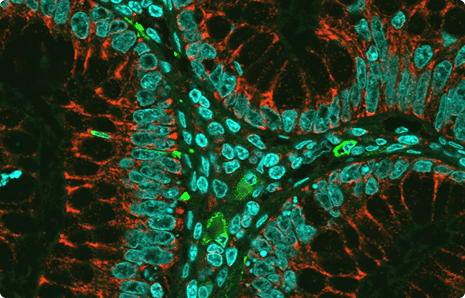
Right. Colorectal cancer. Red is the mitochondria, blue is the cell nuclei.

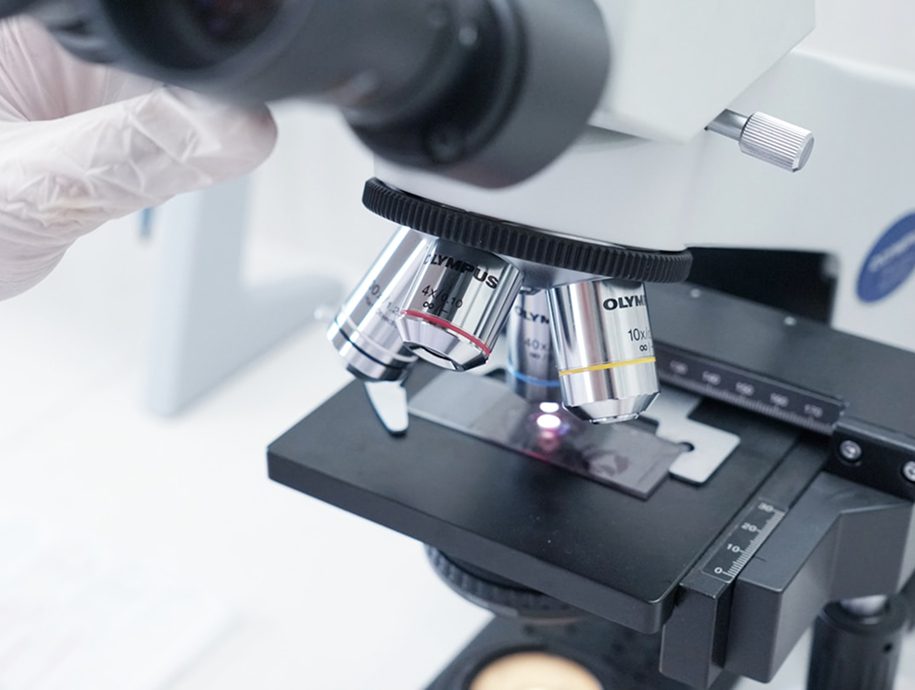
The mission of the Chemical Biology Laboratory (CBL, formerly the Bioenergetics Laboratory) is to understand disease-related alterations in cellular energy metabolism. Our research insights can be applied to improve disease diagnosis, prognosis, and treatment strategies.
Research in the CBL is primarily focused on mitochondrial function in living cells and the factors influencing its activity. We apply systems biology approaches, specifically systems-level cell bioenergetics and fluxomics (the analysis of metabolic fluxes), combining both experimental studies and mathematical modeling. This strategy allows us to gain deeper insights into the regulatory mechanisms of energy metabolism and to pinpoint the mechanisms underlying pathological changes.
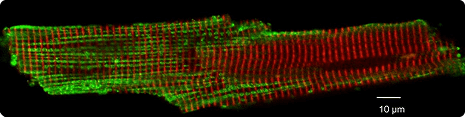
Left. Isolated cardiac cell under a confocal microscope. Red is α-actinin, green is the VDAC channel.
Right. Colorectal cancer. Red is the mitochondria, blue is the cell nuclei.
The CBL has established both the theoretical and experimental foundation for the advancement of fundamental and applied research in cell bioenergetics. Collaboration with international research groups plays a central role in our projects – through direct partnerships as well as joint initiatives within Horizon Europe, COST Actions, and EEA Grants.
In Estonia, CBL maintains strong collaborations with all major hospitals in Tallinn, the Tartu University Hospital, as well as with Tallinn University of Technology, the University of Tartu, and Tallinn University. Graduate students from these universities are actively involved in the laboratory’s research projects and have successfully defended their theses under the supervision of our scientists.
The head of the CBL, Lead Researcher Dr. Tuuli Käämbre, and the laboratory’s research were recognized with the Estonian National Research Award in 2023. The laboratory’s work is positively evaluated in two areas of the European Commission Classification of Sciences (CERCS): natural sciences, and biomedicine.
Further information from Tuuli Käämbre tuuli.kaambre@kbfi.ee